

In today’s digital-first business environment, a website is no longer optional. It is a core asset for branding, marketing, customer engagement, and long-term growth. For small and medium businesses, selecting the right website technology plays a critical role in controlling costs, improving efficiency, and maintaining flexibility. This is why CMS websites have become one of the most preferred solutions for growing businesses.
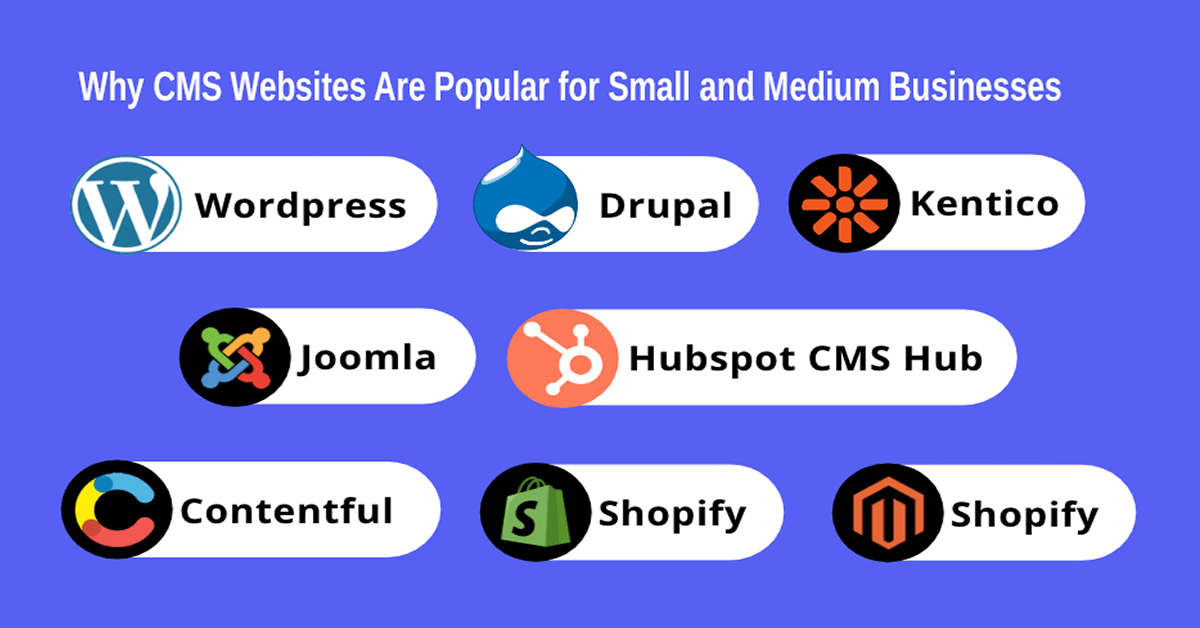
A CMS, or Content Management System, allows businesses to create, edit, and manage website content through a user-friendly interface without advanced technical knowledge. Popular platforms such as WordPress, Joomla, and Drupal have made professional website management accessible to businesses of all sizes. Below are the key reasons why CMS websites are widely used by small and medium businesses.
1. Easy Website Management Without Technical Skills
One of the strongest advantages of CMS websites is their ease of use. Business owners and team members can update text, images, blog posts, services, or product information without writing code.
Most CMS platforms provide visual editors that work similarly to common word processing tools. This allows businesses to manage their websites independently and keep content updated at all times.
Benefits for small and medium businesses:
- Faster content updates
- Reduced reliance on developers
- Lower long-term maintenance costs
2. Cost-Effective Website Development
Budget efficiency is a major concern for small and medium businesses. CMS platforms significantly reduce development expenses by offering open-source frameworks, ready-made themes, and functional plugins.
Instead of building every feature from the ground up, businesses can integrate proven tools for contact forms, search engine optimization, online payments, booking systems, and customer management. This results in a professional website with advanced features at a reasonable cost.
3. Search Engine Optimization Friendly Structure
Visibility on search engines is essential for online success. CMS websites are built with SEO best practices in mind, making them easier to optimize for search engines like Google.
CMS platforms support clean URL structures, mobile responsiveness, fast loading speeds, and structured content. In addition, SEO plugins allow businesses to manage meta titles, descriptions, headings, and images efficiently.
SEO advantages include:
- Easy on-page optimization
- Improved search engine indexing
- Better mobile performance
- Higher chances of ranking for competitive keywords
4. Scalability to Support Business Growth
A CMS website can grow alongside your business. Small businesses often start with a basic website and expand over time. CMS platforms make this process simple and cost-effective.
Businesses can easily add new pages, blogs, eCommerce functionality, multilingual support, or third-party integrations without rebuilding the entire website. This flexibility ensures long-term usability and return on investment.
5. Faster Website Launch
Time is a valuable resource for any business. CMS-based websites can be developed and launched much faster than fully custom-coded solutions.
With pre-built layouts, plugins, and frameworks, developers can focus on customization, performance, and security. This allows businesses to go live quickly and start generating leads or sales sooner.
6. Strong Security With Regular Updates
Security is a common concern for business owners. Popular CMS platforms are supported by large developer communities that continuously release security updates and performance improvements.
When properly maintained, CMS websites provide strong protection through user role management, secure plugins, regular backups, and firewall integrations. This helps safeguard business data and customer information.
7. Flexible Design and Branding Options
CMS platforms offer complete design flexibility. Businesses can choose from thousands of professional themes or request fully custom designs that reflect their brand identity.
Whether the goal is a corporate website, portfolio, service-based platform, or online store, a CMS can be tailored to match specific business requirements and branding guidelines.
8. Ideal Platform for Content Marketing
Content marketing plays a major role in building trust and authority online. CMS websites make publishing and managing content simple and efficient.
Built-in blogging tools, content categorization, and scheduling features allow businesses to publish articles, case studies, and updates consistently. This improves customer engagement and strengthens search engine visibility over time.
Conclusion
CMS websites are popular among small and medium businesses because they deliver an optimal balance of affordability, flexibility, scalability, and control. They empower businesses to manage content independently, optimize for search engines, and adapt quickly to market changes.
Choosing a CMS website is not only a technical decision. It is a strategic investment that supports business growth, digital visibility, and long-term success.
Partnering with an experienced development agency ensures that your CMS website is secure, optimized, and built to achieve real business results.