As digital products become more complex, traditional website architectures are not always enough to meet modern business demands. Businesses today often need to deliver content across multiple platforms such as websites, mobile apps, dashboards, and third-party services. In these scenarios, a Headless CMS can be a powerful solution.
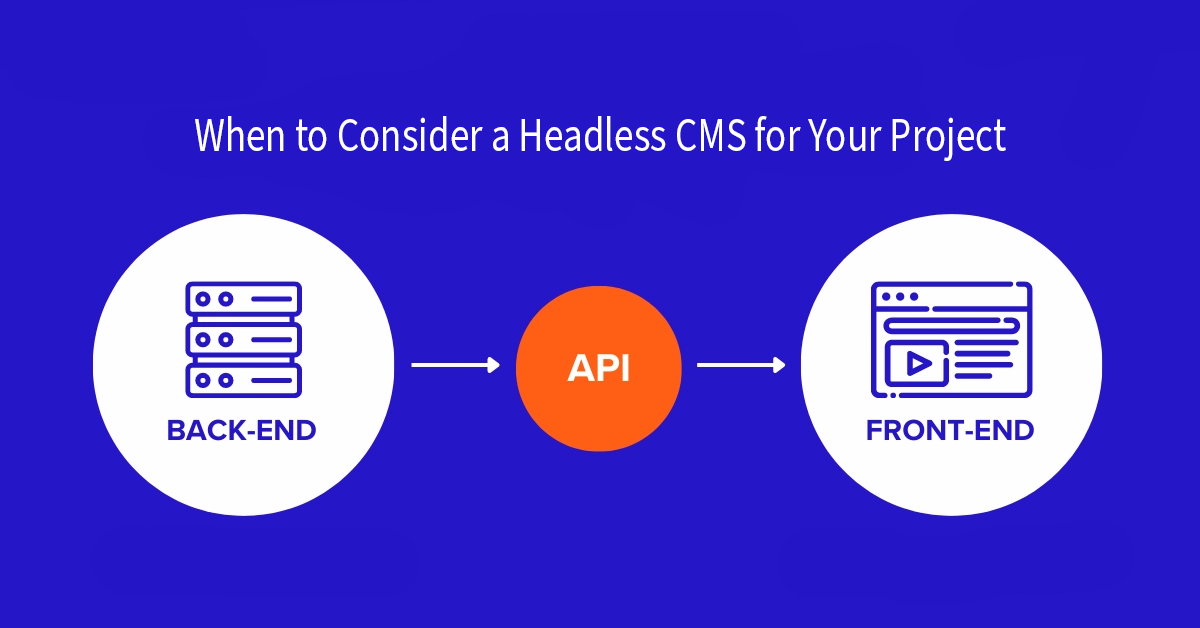
A Headless CMS separates content management from the presentation layer. Instead of controlling how content is displayed, it delivers content through APIs, allowing developers to use any frontend technology. Understanding when to choose a Headless CMS helps businesses build faster, more flexible, and future-ready digital solutions.
1. When You Need Multi-Platform Content Delivery?
If your project requires delivering content to multiple platforms from a single source, a Headless CMS is an ideal choice.
Websites, mobile applications, smart devices, and third-party systems can all consume content via APIs. This ensures consistency across platforms while reducing content duplication and management effort.
Best use cases include:
- Websites and mobile apps sharing the same content
- Digital displays and kiosks
- Content distribution to external systems
2. When You Want Complete Frontend Flexibility?
A Headless CMS gives developers full freedom to choose frontend technologies such as React, Next.js, Vue, or mobile frameworks.
This flexibility allows teams to build highly customized user experiences without being limited by CMS templates or themes. It is especially useful for businesses that require advanced design, animations, or interactive features.
3. When Performance and Speed Are a Priority?
Modern users expect fast-loading websites and applications. Headless CMS solutions often deliver better performance because content is served via APIs and can be optimized using modern caching and CDN strategies.
This architecture reduces server load and improves response times, which positively impacts user experience and search engine rankings.
4. When You Plan for Long-Term Scalability?
Projects that are expected to grow significantly benefit from the scalable nature of a Headless CMS.
As traffic, content volume, and integrations increase, a Headless CMS can scale independently from the frontend. This makes it easier to expand features, integrate new services, or redesign interfaces without disrupting the content system.
5. When You Need Strong API and Integration Capabilities?
Headless CMS platforms are built around APIs, making them ideal for integration-heavy projects.
They work well with CRMs, ERP systems, eCommerce platforms, analytics tools, and marketing automation software. This allows businesses to create connected digital ecosystems without complex workarounds.
6. When Your Project Requires Omnichannel Marketing?
For businesses focused on omnichannel marketing, a Headless CMS provides centralized content control.
Marketing teams can manage content once and distribute it across multiple channels while maintaining brand consistency. This improves campaign efficiency and reduces content management complexity.
7. When Security Isolation Is Important?
A Headless CMS improves security by separating content management from the frontend.
Since the CMS backend is not directly exposed to users, the attack surface is reduced. API-based access, authentication controls, and permission management further strengthen security.
8. When You Have a Development Team or Agency Support?
Headless CMS solutions are best suited for projects with technical resources available. While they offer flexibility, they also require frontend development expertise.
Businesses working with experienced development agencies can fully leverage the benefits of a Headless CMS to build high-performance and scalable applications.
When a Headless CMS May Not Be the Right Choice?
A Headless CMS may not be ideal for small projects that only require a simple website with minimal customization. Traditional CMS platforms can be more cost-effective and easier to manage in such cases.
Understanding project requirements and long-term goals is essential before choosing this architecture.
Conclusion
A Headless CMS is a strong choice for projects that require flexibility, performance, scalability, and multi-channel content delivery. It empowers businesses to build modern digital experiences without being limited by traditional CMS structures.
If your project involves complex integrations, multiple platforms, or long-term growth, a Headless CMS can provide the foundation needed for success. Partnering with a professional development agency ensures the solution is implemented correctly and aligned with your business objectives.