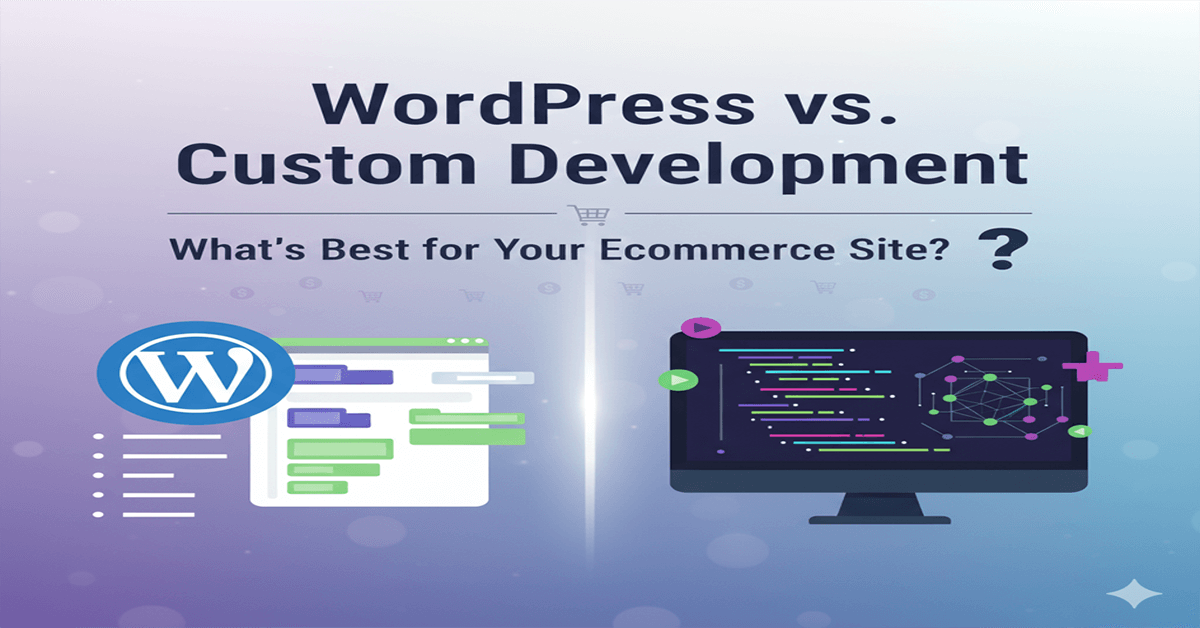
Choosing the right approach for your website or web application is a critical decision for any business. The choice between a custom developed website and a CMS (Content Management System) can significantly impact performance, scalability, security, and overall user experience.
Understanding your business needs, goals, and resources will help determine the best solution.
1. Define Your Business Goals and Requirements
Start by clarifying what your website or application needs to achieve. Consider whether you need a simple website for content updates or a complex system with custom workflows and integrations.
- CMS: Ideal for content-driven websites, blogs, small business sites, and projects requiring frequent updates.
- Custom Development: Best for complex applications, unique user experiences, and advanced business functionalities.
2. Assess Your Budget
Budget is a major factor in deciding between CMS and custom development.
- CMS: Lower upfront costs, faster deployment, and reduced maintenance expenses.
- Custom Development: Higher initial investment but provides long-term flexibility and tailored solutions.
3. Evaluate Required Features and Functionality
Analyze the features your website or application requires.
- CMS platforms offer pre-built themes and plugins that meet common needs, but complex custom features may be limited or require expensive workarounds.
- Custom development allows you to build unique features and workflows tailored exactly to your business.
4. Consider Scalability and Growth
Think about your business’s growth trajectory.
- CMS websites can handle small to moderate growth but may face performance limitations with high traffic or heavy customization.
- Custom development provides scalable architecture designed to grow with your business without significant performance issues.
5. Review Security and Compliance Needs
Security is critical for businesses handling sensitive data.
- CMS: Security depends on regular updates, third-party plugins, and platform support.
- Custom Development: Security measures can be built directly into the system, offering enterprise-grade protection and easier compliance with regulations.
6. Evaluate Maintenance and Technical Expertise
Consider who will manage and maintain the website.
- CMS: Easier for non-technical teams to manage content, updates, and basic settings.
- Custom Development: Requires professional technical support for updates, security, and system enhancements.
7. Decide Based on Time to Market
Time constraints often influence the decision.
- CMS: Faster deployment due to ready-made templates and plugins.
- Custom Development: Longer development cycles, but provides a tailored, optimized solution.
8. Future Flexibility and Ownership
Think long-term about control and adaptability.
- CMS: Limited flexibility due to platform and plugin dependencies.
- Custom Development: Full ownership of the codebase, architecture, and future modifications, allowing businesses to adapt as needs change.
Conclusion
Deciding between custom development and a CMS requires a careful evaluation of your business goals, budget, technical requirements, security needs, and growth plans.
- Choose a CMS website if you need a cost-effective, easy-to-manage solution with quick deployment.
- Choose custom development if your project demands scalability, unique features, enterprise-level security, and long-term control.
Making the right choice ensures your website or application supports business objectives today while remaining adaptable for future growth.