


Choosing the right hosting solution is a critical decision for any business website or application. Hosting affects performance, security, scalability, and overall user experience. Two of the most common hosting options are Shared Hosting and VPS Hosting. While both serve different needs, understanding their differences helps businesses select the most suitable solution.
VPS hosting offers more control and resources, while shared hosting focuses on affordability and simplicity. Knowing when to use each option can significantly impact your website’s reliability and growth potential.
What Is Shared Hosting?
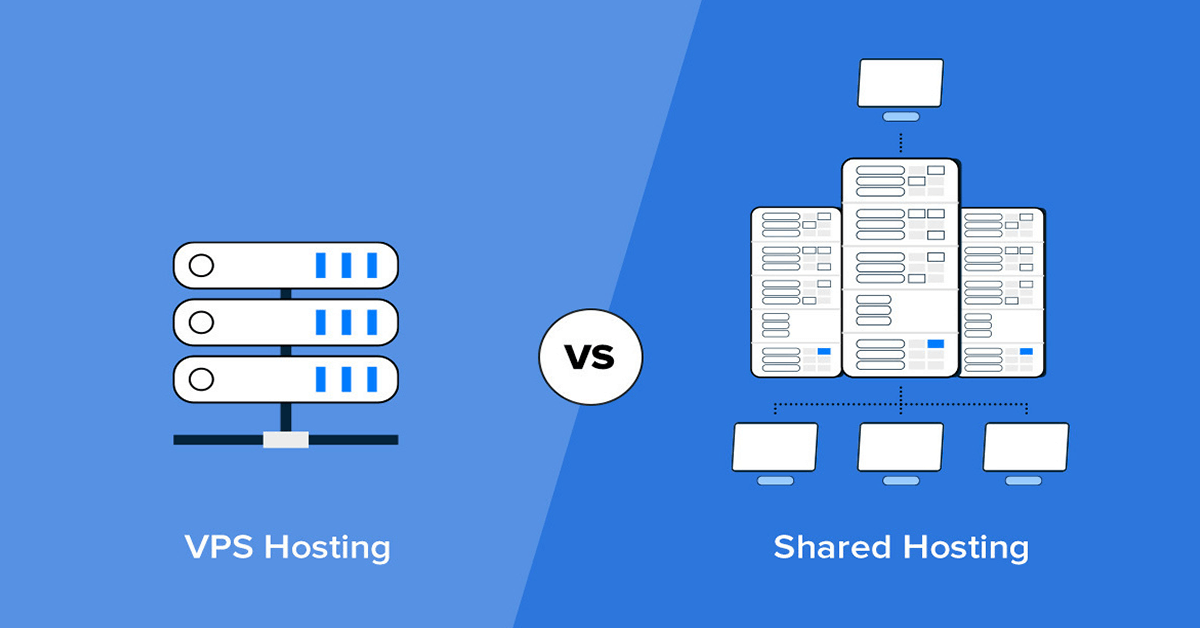
Shared hosting is a hosting environment where multiple websites share the same server resources, including CPU, RAM, storage, and bandwidth.
It is the most budget-friendly hosting option and is commonly used for small websites, blogs, and early-stage business sites with low traffic requirements.
Key Characteristics of Shared Hosting
- Low hosting cost
- Minimal server management required
- Shared resources across multiple users
- Limited performance and customization
What Is VPS Hosting?
VPS hosting, or Virtual Private Server hosting, divides a physical server into multiple virtual servers using virtualization technology.
Each VPS operates as an independent environment with dedicated resources. This provides greater performance, control, and security compared to shared hosting.
Key Characteristics of VPS Hosting
- Dedicated CPU, RAM, and storage
- Improved performance and stability
- Greater customization and control
- Better security and isolation
Key Differences Between VPS Hosting and Shared Hosting
1. Resource Allocation
In shared hosting, all websites use the same pool of server resources. High traffic or activity on one website can affect others.
With VPS hosting, resources are allocated specifically to your server instance, ensuring consistent performance regardless of other users.
2. Performance and Speed
Shared hosting performance can fluctuate due to resource sharing.
VPS hosting delivers faster loading times and better performance, making it suitable for business websites, applications, and growing traffic demands.
3. Security and Isolation
Shared hosting environments are more vulnerable because multiple websites operate on the same server.
VPS hosting provides isolation between virtual servers, reducing the risk of security breaches caused by other users.
4. Scalability
Shared hosting offers limited scalability.
VPS hosting allows easy upgrades of resources such as RAM, storage, and processing power as business needs grow.
5. Control and Customization
Shared hosting offers limited control over server configurations.
VPS hosting allows root or administrative access, enabling advanced configurations, custom software installations, and server-level optimizations.
6. Cost Considerations
Shared hosting is the most affordable option and suitable for beginners.
VPS hosting costs more but provides better performance, security, and flexibility, offering higher long-term value for growing businesses.
When Should You Choose Shared Hosting?
Shared hosting is suitable if:
- You have a small or new website
- Traffic levels are low
- Budget is a primary concern
- Advanced server control is not required
When Should You Choose VPS Hosting?
VPS hosting is ideal if:
- Your website or application is growing
- Performance and uptime are critical
- You handle sensitive data
- You need scalability and customization
Conclusion
Shared hosting and VPS hosting serve different purposes. Shared hosting is an affordable starting point, while VPS hosting provides greater control, security, and performance for growing businesses.
For businesses planning long-term growth, VPS hosting is often the better investment. Choosing the right hosting solution ensures stability, scalability, and a strong foundation for your online presence.