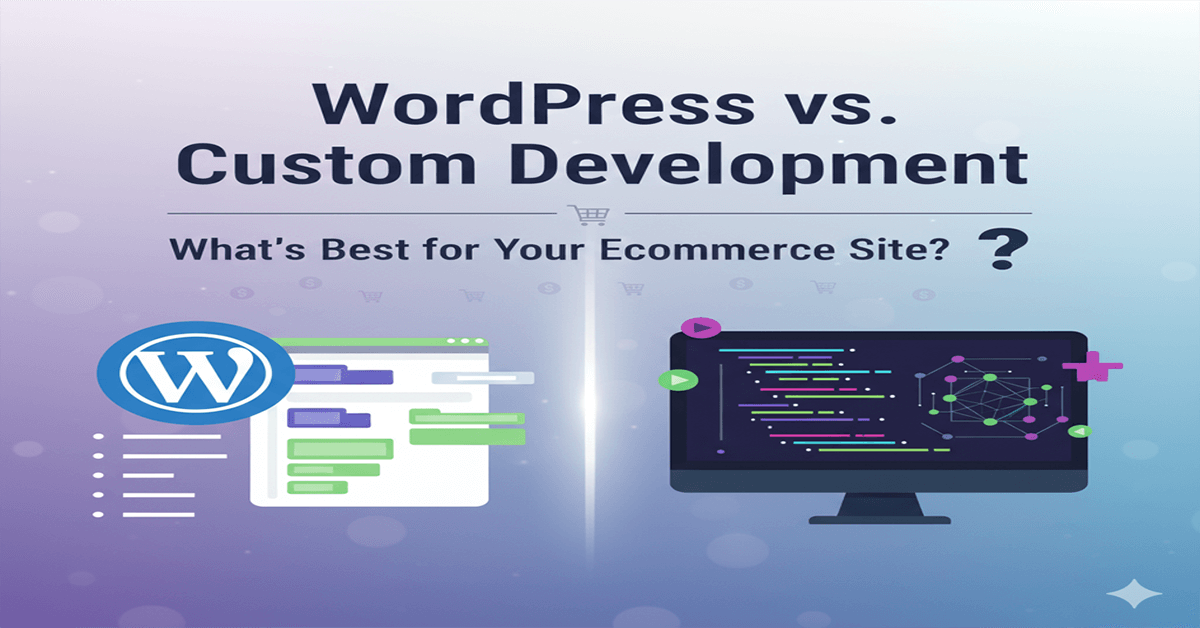
Choosing between a CMS-based website and custom development is a critical decision that impacts your budget, scalability, performance, and long-term business growth. Each approach has its own strengths, and the right choice depends on your goals, technical needs, and resources.
This guide helps businesses understand how to evaluate both options and decide which solution fits their project best.
Understanding CMS-Based Development
A Content Management System allows you to build and manage websites using pre-built frameworks, themes, and plugins.
CMS platforms such as WordPress, Joomla, and Drupal enable faster development and easier content management, making them popular for many business websites.
When a CMS Is a Good Fit
- You need a website launched quickly
- Your budget is limited
- Content updates are frequent
- Your website follows standard business requirements
- You prefer minimal technical involvement
Understanding Custom Development
Custom development involves building a website or application from the ground up using tailored code and architecture.
This approach provides complete control over design, functionality, and performance, making it suitable for complex or unique business needs.
When Custom Development Is a Good Fit
- Your project has unique or complex functionality
- You need advanced system integrations
- Performance and scalability are top priorities
- Security requirements are strict
- Your business expects long-term expansion
Key Factors to Consider When Deciding
1. Project Goals and Requirements
If your website requires standard features such as blogs, service pages, and contact forms, a CMS is usually sufficient.
If your project involves custom workflows, advanced logic, or specialized user interactions, custom development may be necessary.
2. Budget and Timeline
CMS websites are more cost-effective and faster to launch due to pre-built components.
Custom development requires a higher initial investment and longer development time but delivers tailored solutions.
3. Scalability and Future Growth
CMS platforms can scale well for small to medium growth when properly configured.
Custom-built solutions are better suited for businesses expecting rapid growth, high traffic, or evolving system requirements.
4. Content Management Needs
If non-technical team members need to manage content regularly, a CMS provides ease of use and efficiency.
Custom solutions may require additional interfaces or technical support for content updates.
5. Security and Compliance
CMS platforms rely on regular updates and plugins for security.
Custom development allows full control over security architecture, making it ideal for industries with strict compliance requirements.
6. Maintenance and Long-Term Costs
CMS websites generally have lower maintenance costs but depend on third-party updates.
Custom websites require dedicated maintenance but offer stability and control without dependency on external plugins.
CMS vs Custom Development at a Glance
- CMS is faster and more affordable
- Custom development offers maximum flexibility
- CMS suits standard business websites
- Custom solutions support complex and enterprise-level projects
Making the Right Decision
Choose a CMS if your priority is speed, affordability, and easy content management.
Choose custom development if your business demands unique functionality, scalability, and full technical control.
Consulting with an experienced development agency can help assess your requirements and recommend the most effective solution.
Conclusion
Deciding between CMS and custom development depends on your business goals, technical needs, and future plans. A CMS is ideal for simplicity and efficiency, while custom development is an investment in flexibility and long-term scalability.
Making the right choice ensures your website supports growth, performance, and business success.